Whitney Acqusition


Universal Beauty
SEREIS
2025 - Present
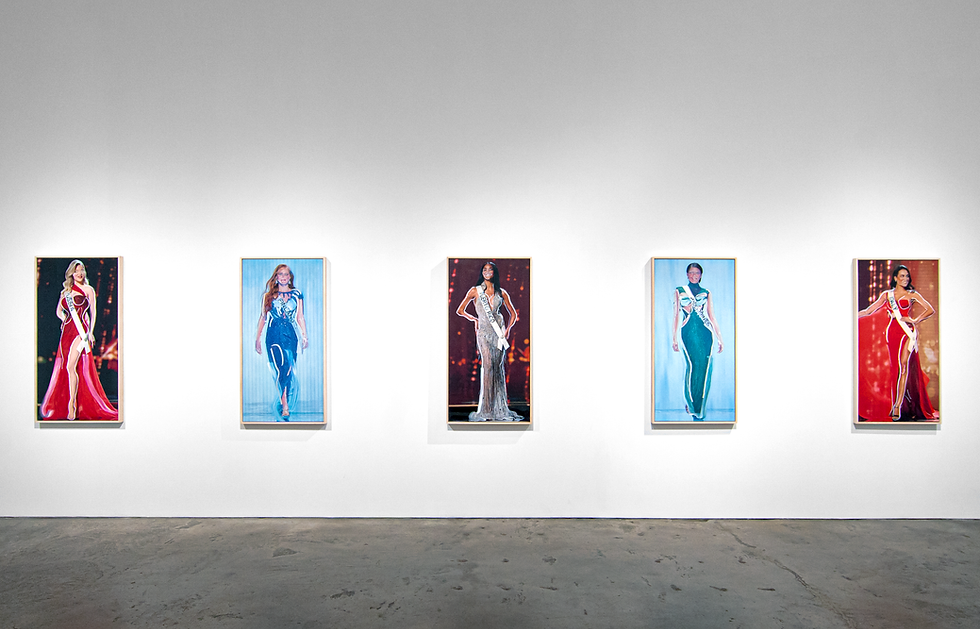
In Gretchen Andrew’s ongoing series of Facetune Portraits, custom robotics scribe the popular AI-driven beauty filters of social media into oil paintings derived from images of quintessential beauty. Normally, on TikTok and via Zoom’s “touch up” feature, these visual modifications occur seamlessly and invisibly. By making this process visible, Facetune Portraits reveals the messy co-existence we have with our digital selves.
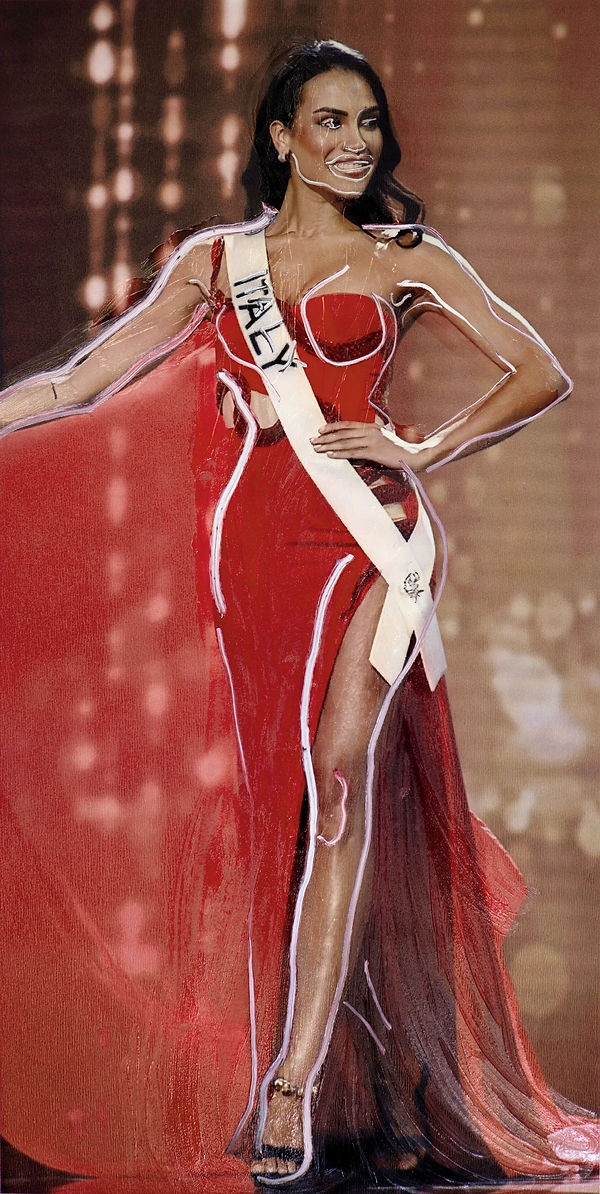
Made up of a potential 100 Contestants from 100 different countries, Facetune Portraits: Universal Beauty looks at the homogenizing impact of this monocultural, single AI beauty standard across the faces and bodies of famously beautiful women from around the world. As this same algorithm sculpts the female form into a single, universal look, we see diversity disappear. While unaltered human faces coexist with the algorithmically 'perfected' versions, a double portrait is created – a visualization of reality meeting desire. The result is a full-body portrait of tension, where each brush stroke, each smudge, each painterly contradiction is a record of disagreement between how our faces and bodies actually look and how AI says we should be.
These works outwardly portray the absurd, and too-real scars of the hidden ‘perfections’ that lurk behind so many of the images we experience – revealing our desire not just to be beautiful, but to be like everyone else, accepted as much by the algorithms as by our peers.
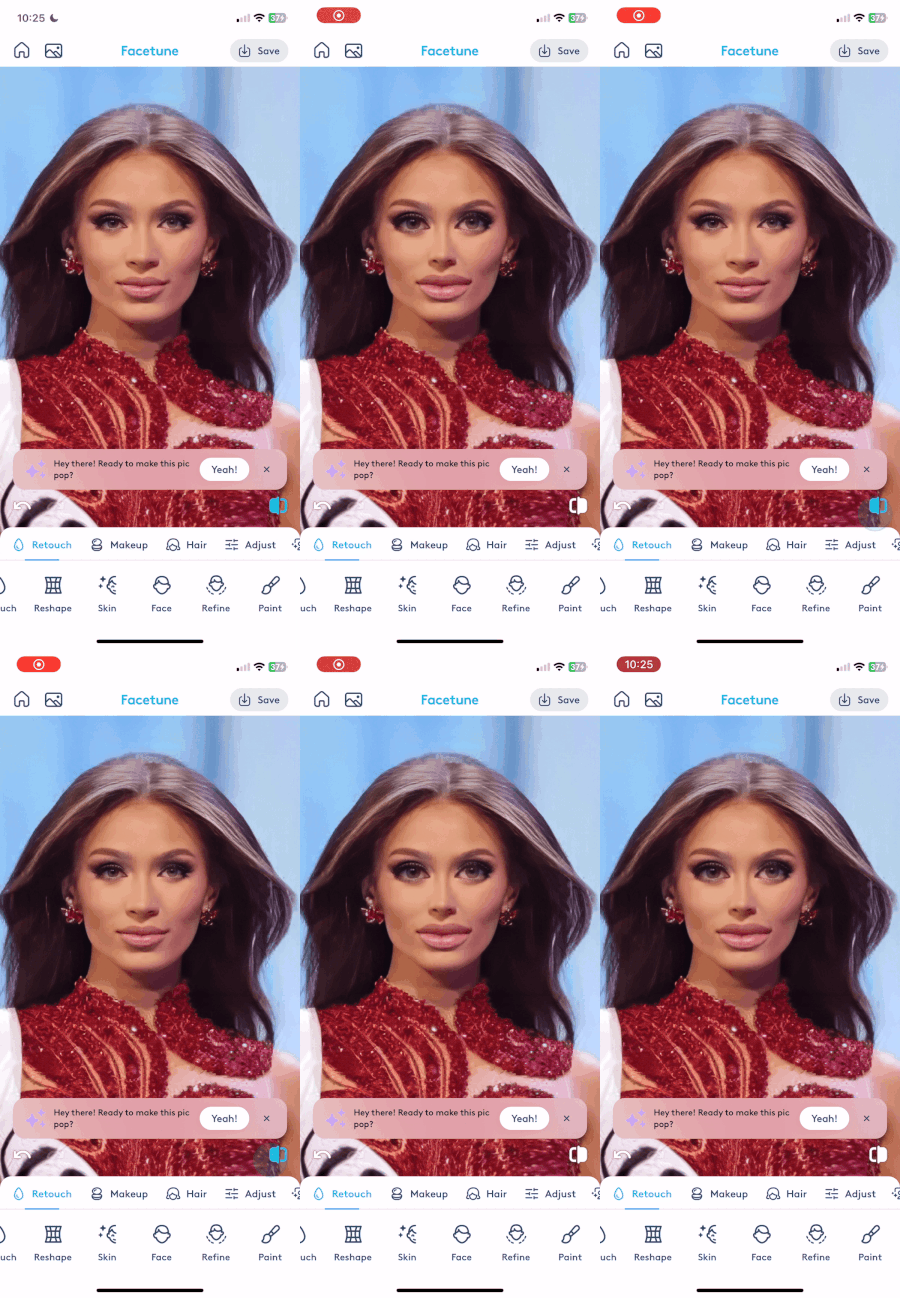
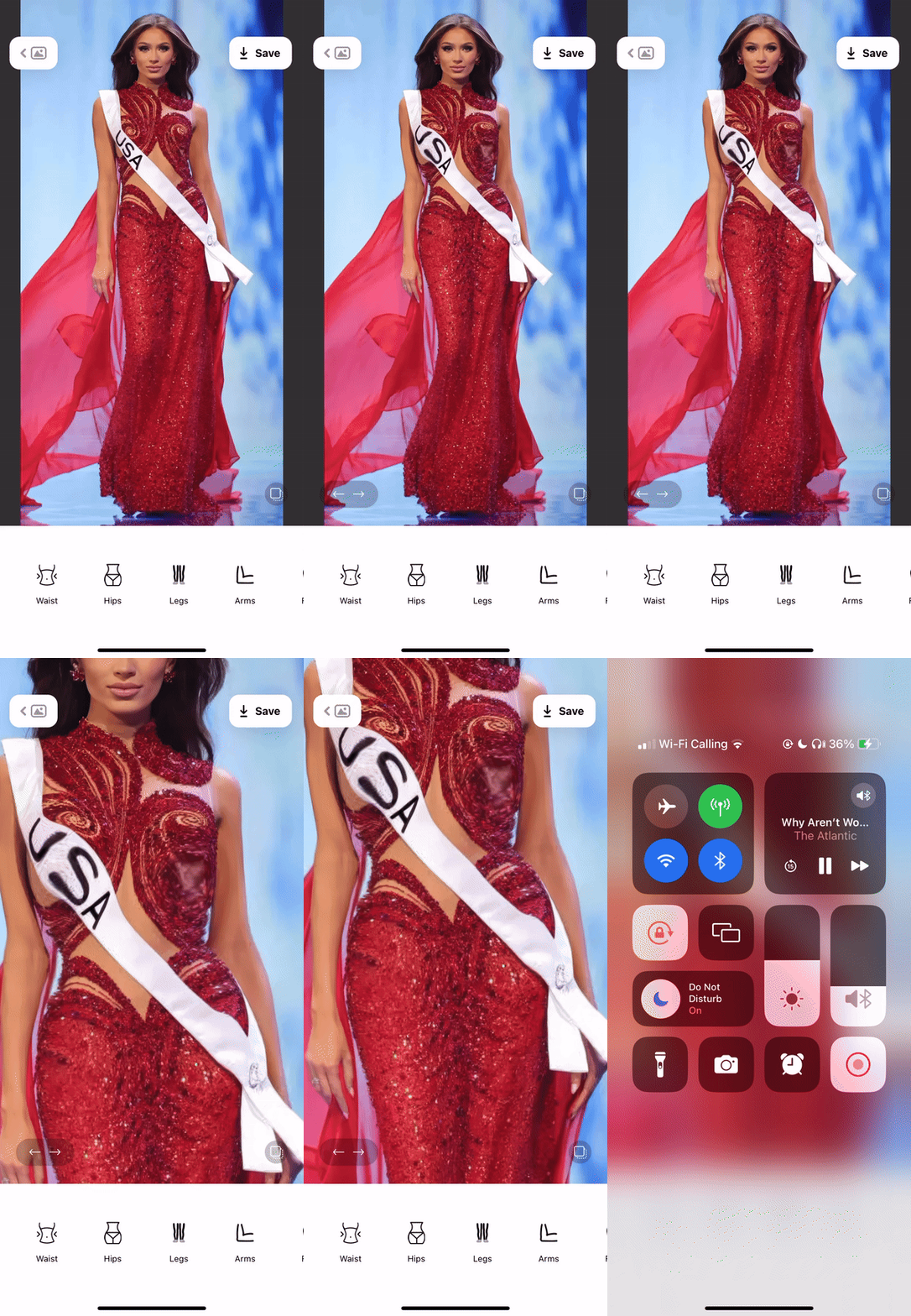

Oil Paint Printer
I then print the original, unmodified image in oil paint.
XY Drawing Robot - Apply Facetune modifications physically
The wet oil painting is placed under an XY-axis drawing robot. The robot, instructed by the discrepancies between the original image and an AI-modified (Facetuned) version, adds brushstrokes where lines have changed. This process visually highlights the AI's alterations, creating messy paint strokes that attempt to reconcile the differences, rather than seamlessly editing pixel
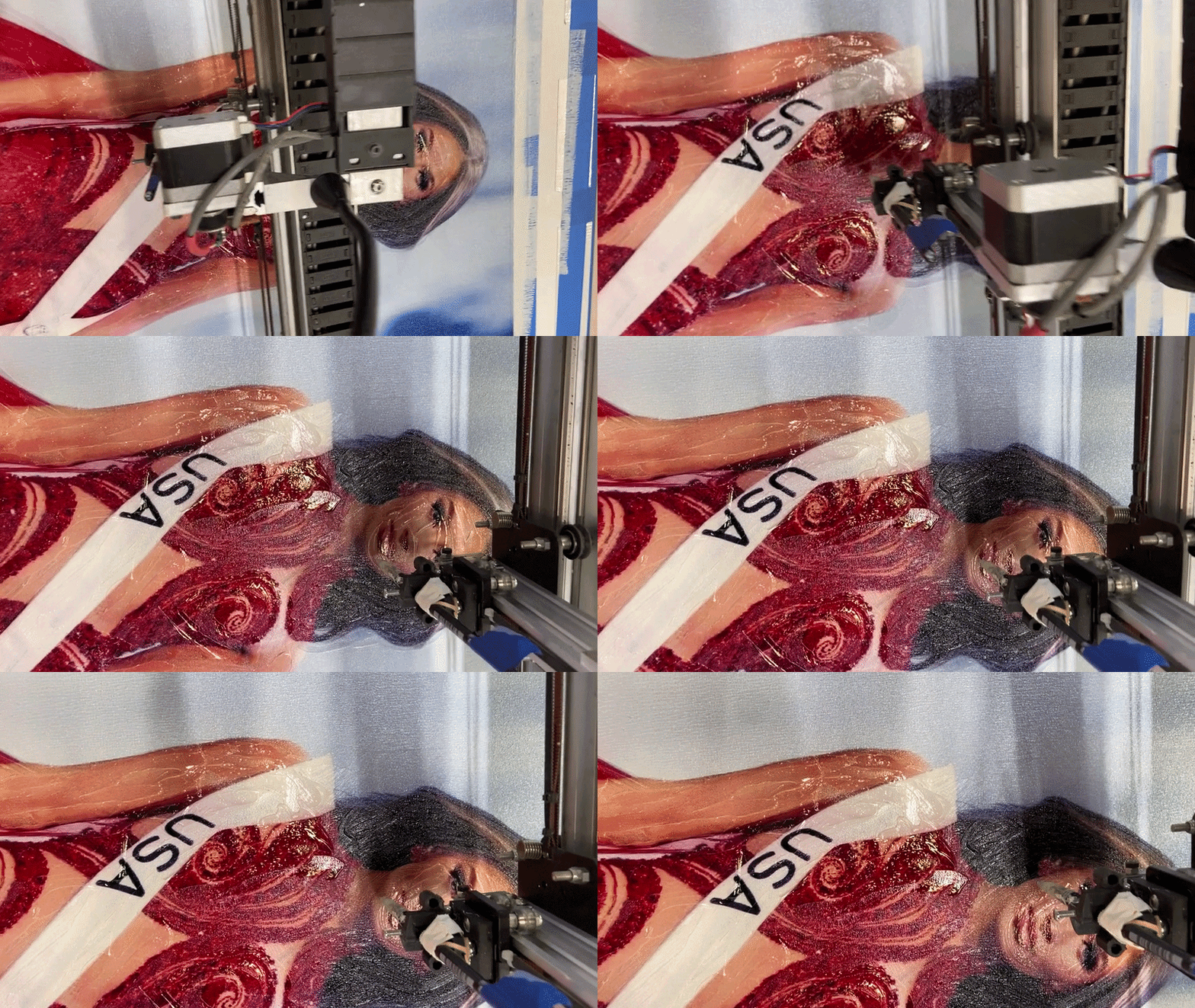
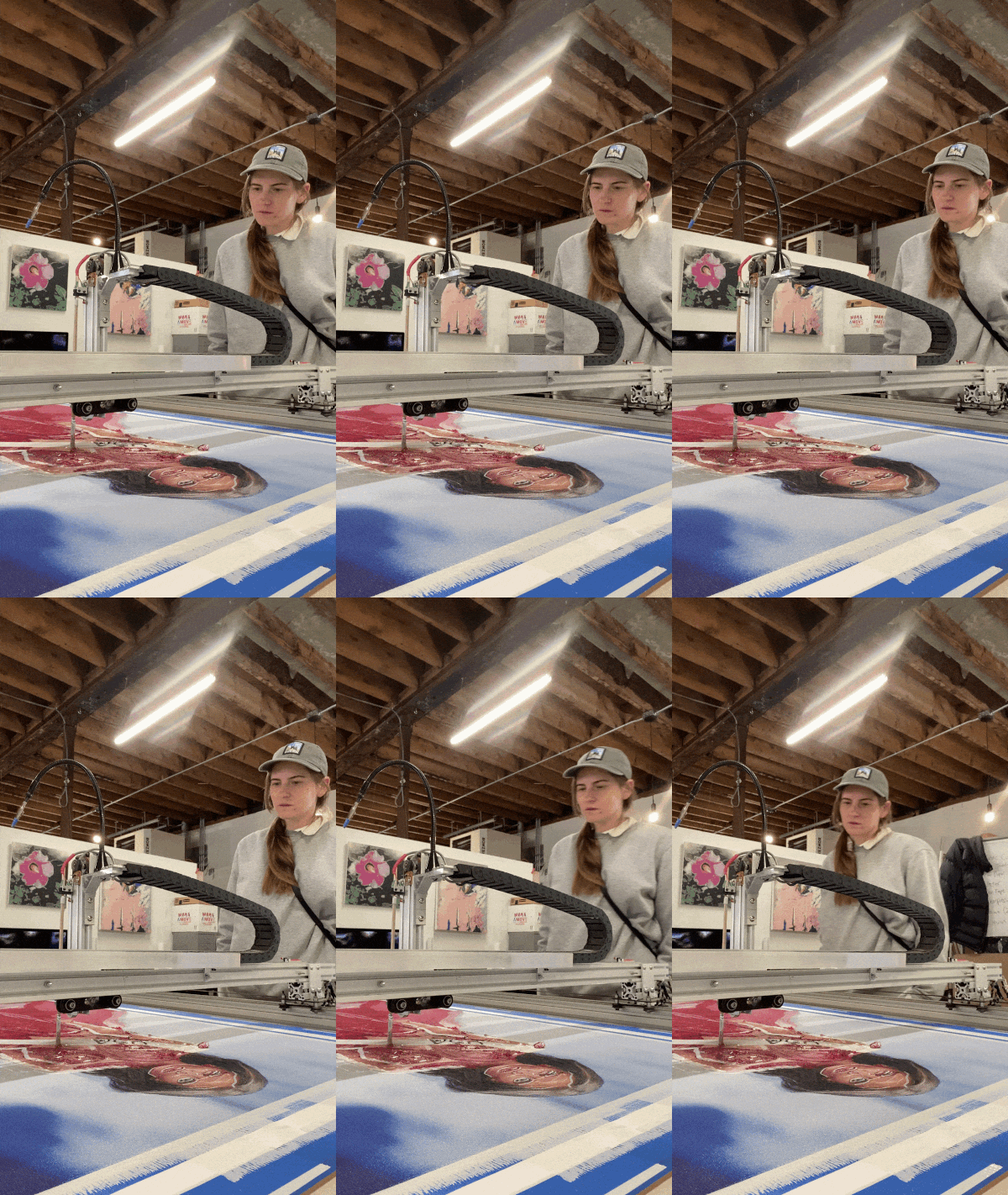
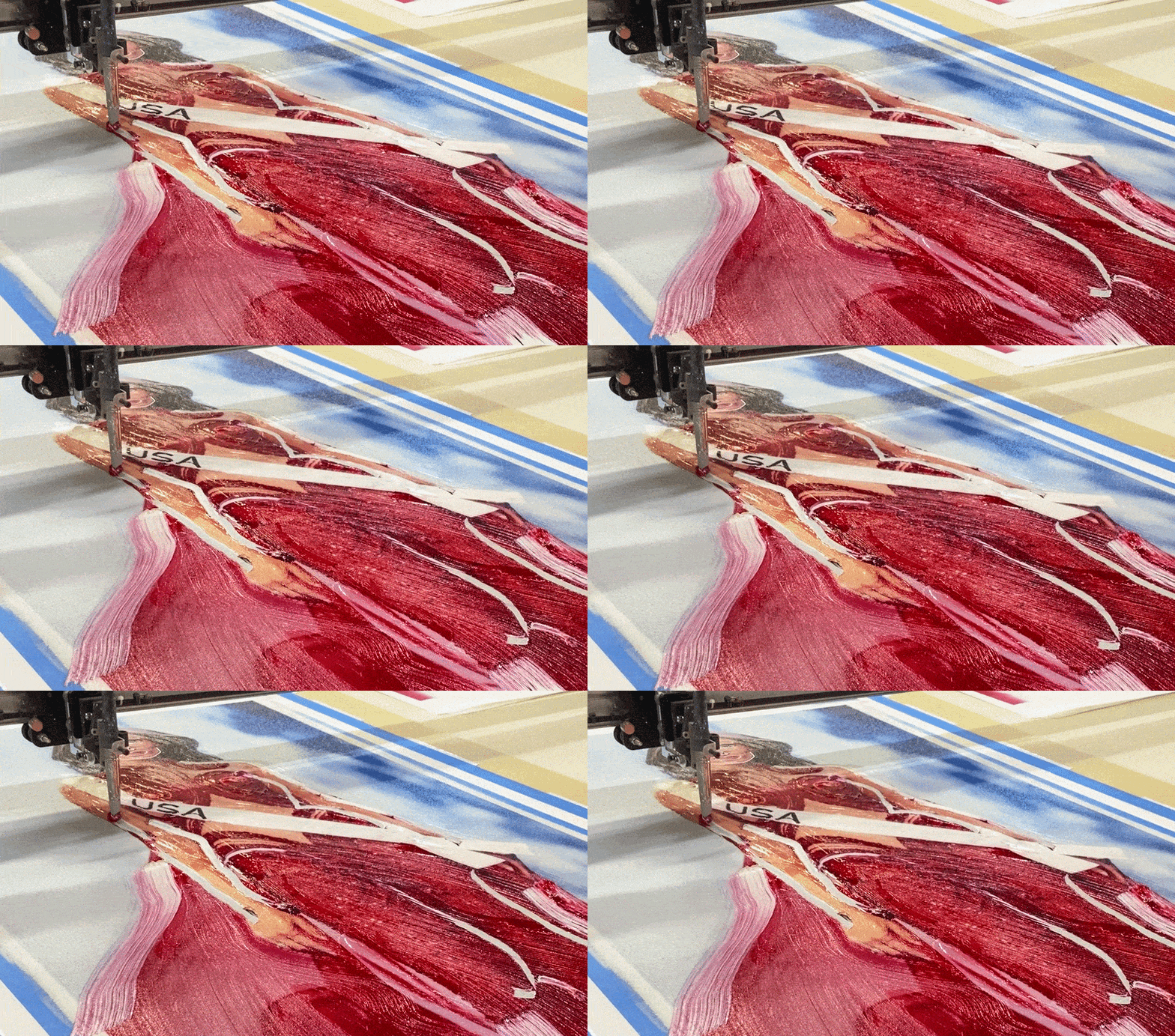
How does the robot interpert the Facetune Algorithms?
This video shows pre and post facetuned images as well as the lines showing the difference. These lines represent where the image has changed. These areas of change are converted into g-code and sent to the drawing robot to become brush marks.



This concludes our studio visit but id you'd like to continue you can explore my New Studio Projects
Bio: Gretchen Andrew (b. 1988, Los Angeles) is an artist based in Park City, Utah. She hacks systems of power with art, code, and glitter, combining traditional oil painting with AI, robotics, and internet-based interventions. After a five-year apprenticeship with British painter Billy Childish, she developed a practice that joins painterly skill with the technologies shaping contemporary life. Her early performative “vision boards” manipulated search results to place her name alongside major art prizes and institutions. In Facetune Portraits, Andrew uses custom robotics to translate AI-driven beauty edits into physical brushstrokes, revealing the tension between lived appearance and algorithmic ideals. In 2025, the Whitney Museum of American Art acquired two paintings from Facetune Portraits: Universal Beauty. Her work is also held by 21c Museum Hotel, RFC Art Collection, Francisco Carolinum Linz, and Monterey Museum of Art.
Work: In Facetune Portraits: Universal Beauty, Gretchen Andrew makes visible the beauty edits that normally disappear into a phone screen. She begins with images of beauty pageant contestants and uses apps such as Facetune and BodyTune to generate AI-driven alterations. An oil-paint printer transfers the original image onto a textured white underpainting. Andrew then places the wet painting beneath a custom XY drawing robot. Guided by the differences between the original and altered images, the robot paints the changed lines into the canvas. Andrew directs the speed, pressure, and brush selection, while the system determines where the image has changed. Instead of a seamless digital correction, the process leaves marks, smudges, and visible friction. Across women represented from different countries, the series asks what happens when one algorithmic ideal is applied to many faces. Each painting holds a tension between a person’s image and the version technology says she should become.
Facetune Portrait – Universal Beauty, USA Oil on canvas 48 × 24 in.2025 Facetune and BodyTune apps; oil-paint printer; custom XY drawing robot
Facetune Portrait – Universal Beauty, Puerto Rico Oil on canvas 48 × 24 in. 2025 Facetune and BodyTune apps; oil-paint printer; custom XY drawing robot